Staphylococcus epidermidis & saprophyticus
Gram ⊕Gram-positive cocci in clusters
Staph epidermidis & saprophyticus
Coagulase-NEGATIVE staph: epidermidis sticks to plastic; saprophyticus hits young women.
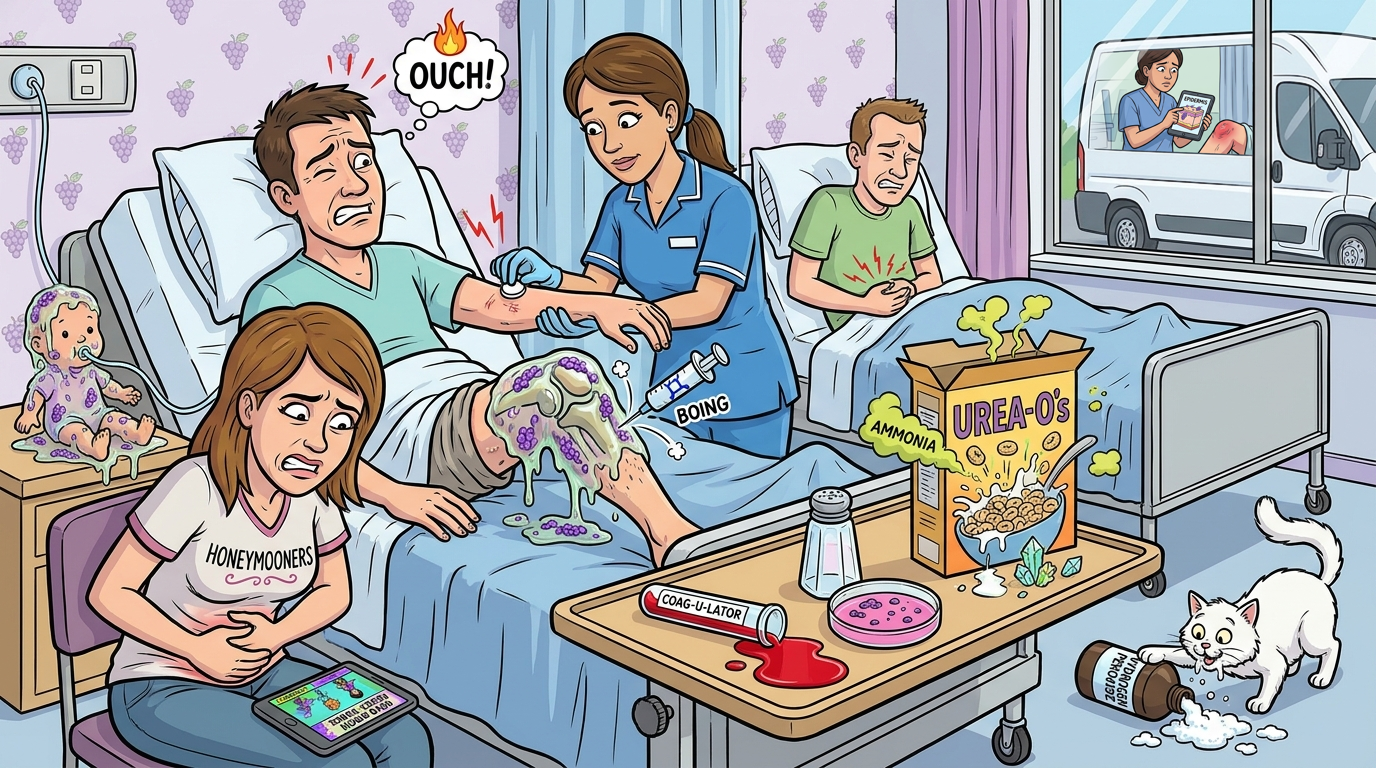
🎬 The Slime & The Honeymoon
One coats catheters in slime, the other follows the newlyweds
 1 / 13
1
Grape clustersAll Staphylococcus species, including S. epidermidis and S. saprophyticus, are Gram-positive cocci that characteristically form grape-like clusters, distinguishing them from Streptococcus which forms chains.
🔗 Staphylococcus species are depicted as purple grape-like clusters.
🔬 Identification
- •Gram-positive cocci in clusters, catalase +, coagulase –.
- •Urease +.
- •S. epidermidis: novobiocin SENSITIVE.
- •S. saprophyticus: novobiocin RESISTANT.
🧫 S. epidermidis disease
- •Biofilm on prosthetic devices, IV catheters, prosthetic joints/valves.
- •Subacute endocarditis on prosthetic valves.
- •Frequent blood-culture contaminant (normal skin flora).
🚺 S. saprophyticus disease
- •Uncomplicated UTI in young sexually active women (2nd to E. coli) — "honeymoon cystitis".
- •Can also cause acute bacterial prostatitis.
- •Treatment: nitrofurantoin or TMP-SMX (first-line for uncomplicated UTI).
🧠 Mnemonics
NO-NO-vobiocinSaprophyticus = Resistant ("No" to novobiocin); epidermidis = Sensitive.
Epidermidis → EquipmentBoth start with E — epidermidis infects equipment (catheters, prosthetics) via biofilm.
🩺 Classic boards tip-off
Newly placed prosthetic valve + low-grade fever + coag-negative GPC in clusters → S. epidermidis biofilm. Sexually active young woman with dysuria → S. saprophyticus.
Lesson Info
- Duration
- 6 minutes
- Status
- Completed
- Topic
- Microbiology
- Unit
- Bacteria


