Staphylococcus aureus
Gram ⊕Gram-positive cocci in clusters
Staphylococcus aureus
Catalase +, coagulase +, β-hemolytic, golden colonies — the toxin-slinging troublemaker.
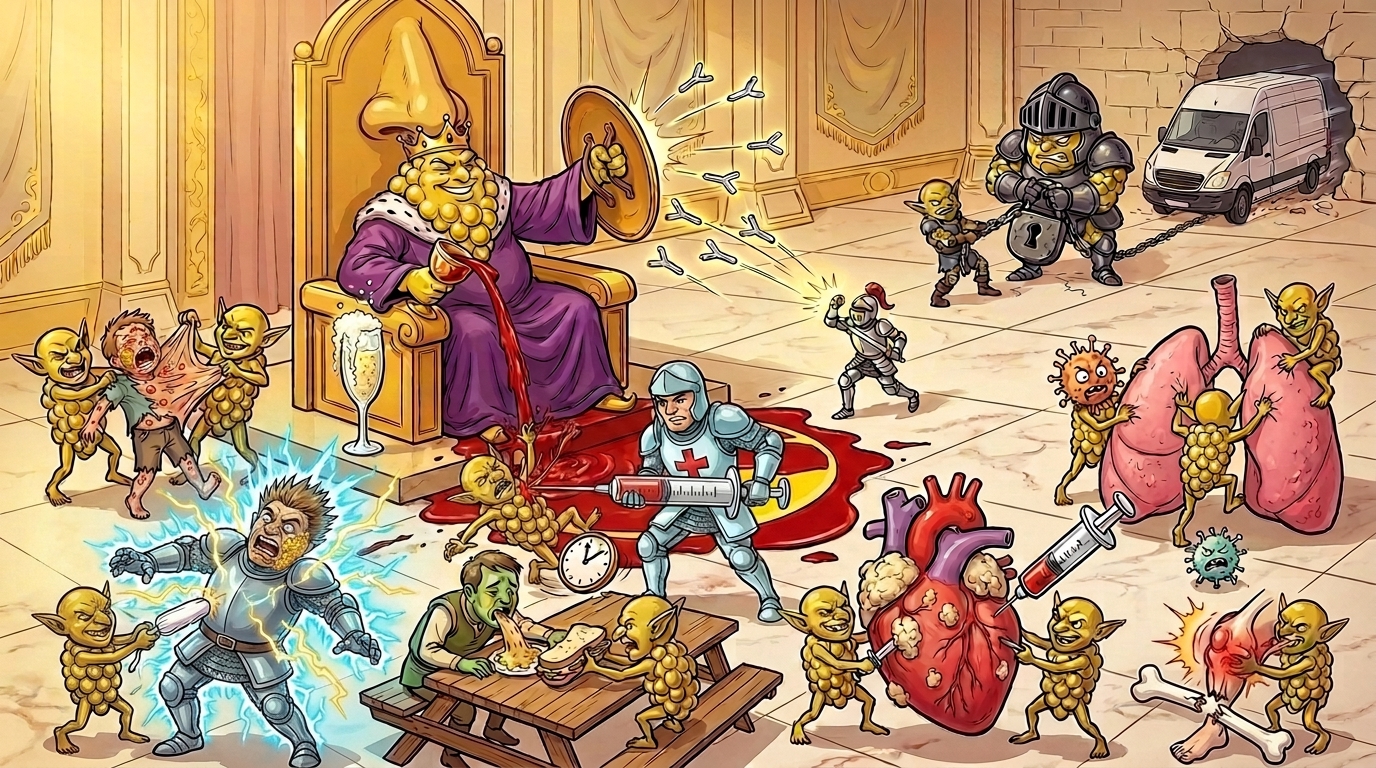
🎬 The Grape King's Court
The golden-grape king and his goblins cause every S. aureus disease in one scene — numbered facts below
 1 / 22
1
Golden grape kingGram-positive cocci in grape-like CLUSTERS (staphylo = "bunch of grapes"). Non-motile, non-spore-forming, facultative anaerobe.
🔗 The king IS a cluster of grapes — Staph = clusters; Strep = chains.
🔬 Identification & lab
- •Gram-positive cocci in clusters; non-motile, non-spore-forming, facultative anaerobe.
- •Catalase-POSITIVE → separates Staphylococcus from Streptococcus.
- •Coagulase-POSITIVE → separates S. aureus from coagulase-negative staph (epidermidis, saprophyticus).
- •β-hemolytic on blood agar; ferments mannitol → yellow on Mannitol Salt Agar (selective).
- •Salt-tolerant (grows in high NaCl); DNase + and protein A on surface.
⚔️ Virulence factors
- •Protein A — binds Fc of IgG, blocks opsonization/phagocytosis.
- •Coagulase — fibrin coat shields organism; staphyloxanthin — antioxidant gold pigment.
- •Catalase — neutralizes neutrophil H₂O₂ (relevant in CGD).
- •Hemolysins, leukocidins (PVL → necrotizing pneumonia/skin), hyaluronidase, staphylokinase, lipase, penicillinase.
☠️ Toxin-mediated disease
- •TSST-1 superantigen → toxic shock (fever, diffuse rash, desquamation of palms/soles, hypotension, ↑AST/ALT). Tampons, nasal packing, surgical wounds.
- •Exfoliative toxins (cleave desmoglein-1) → Scalded Skin Syndrome (children, Nikolsky +, spares mucosa).
- •Heat-stable preformed enterotoxins → rapid (1–6 h) food poisoning with prominent vomiting; self-limited.
🦠 Invasive disease
- •Skin/soft tissue: abscesses, furuncles/carbuncles, cellulitis, impetigo, folliculitis, surgical-site infection.
- •Acute bacterial endocarditis (tricuspid in IVDU; rapid valve destruction).
- •#1 osteomyelitis and (adult) septic arthritis; psoas abscess; vertebral osteomyelitis.
- •Pneumonia (post-influenza/nosocomial) with empyema/cavitation; bacteremia → metastatic abscesses, sepsis.
💊 Treatment & resistance
- •MSSA: anti-staphylococcal penicillins — nafcillin/oxacillin/dicloxacillin, or cefazolin.
- •MRSA (mecA → PBP2a): vancomycin, linezolid, daptomycin (NOT for pneumonia — inactivated by surfactant), ceftaroline; community MRSA SSTI → TMP-SMX, doxycycline, clindamycin.
- •VISA/VRSA: vanA (D-Ala-D-Lac). Add rifampin for prosthetic-material infection; always drain abscesses (source control).
- •Decolonization: intranasal mupirocin + chlorhexidine for recurrent infection/carriers.
⭐ High-yield associations
- •CGD patients get severe catalase-positive infections (S. aureus a classic).
- •Surgical/prosthetic device infection, dialysis & IVDU patients are high risk.
- •Most common cause of: acute endocarditis, osteomyelitis, septic arthritis (adults), and skin abscesses.
- •Hyper-IgE (Job) syndrome → cold staph abscesses; diabetics/nasal carriers colonized.
🧠 Mnemonics
SOAPS. aureus diseases: Skin (SSSS/impetigo/abscess), Osteomyelitis, Acute endocarditis, Pneumonia (post-flu).
"Coagulase clots the golden grapes"The two facts that nail S. aureus: coagulase-POSITIVE and golden colonies.
Superantigens TSSTTSST-1 bridges MHC II ↔ TCR outside the groove → cytokine storm (toxic shock). Enterotoxins work the same way for food poisoning.
MRSA = mecA → PBP2aAltered penicillin-binding protein, low β-lactam affinity. Treat with vanc/linezolid/dapto; daptomycin NOT for lung.
Catalase + & CGDCatalase-positive organisms (S. aureus) cause recurrent infections in Chronic Granulomatous Disease.
🩺 Classic boards tip-off
IV drug user with fever and a new tricuspid (right-sided) murmur → acute S. aureus endocarditis. Recovering influenza patient who acutely worsens with a new lobar/cavitary pneumonia → secondary S. aureus pneumonia. Child with diffuse skin sloughing and a positive Nikolsky sign → Staphylococcal Scalded Skin Syndrome. Young woman with high fever, sunburn-like rash, hypotension, and recent tampon use → TSST-1 toxic shock.
Lesson Info
- Duration
- 11 minutes
- Status
- Completed
- Topic
- Microbiology
- Unit
- Bacteria


