Bacillus anthracis & cereus
Bacillus anthracis and cereus
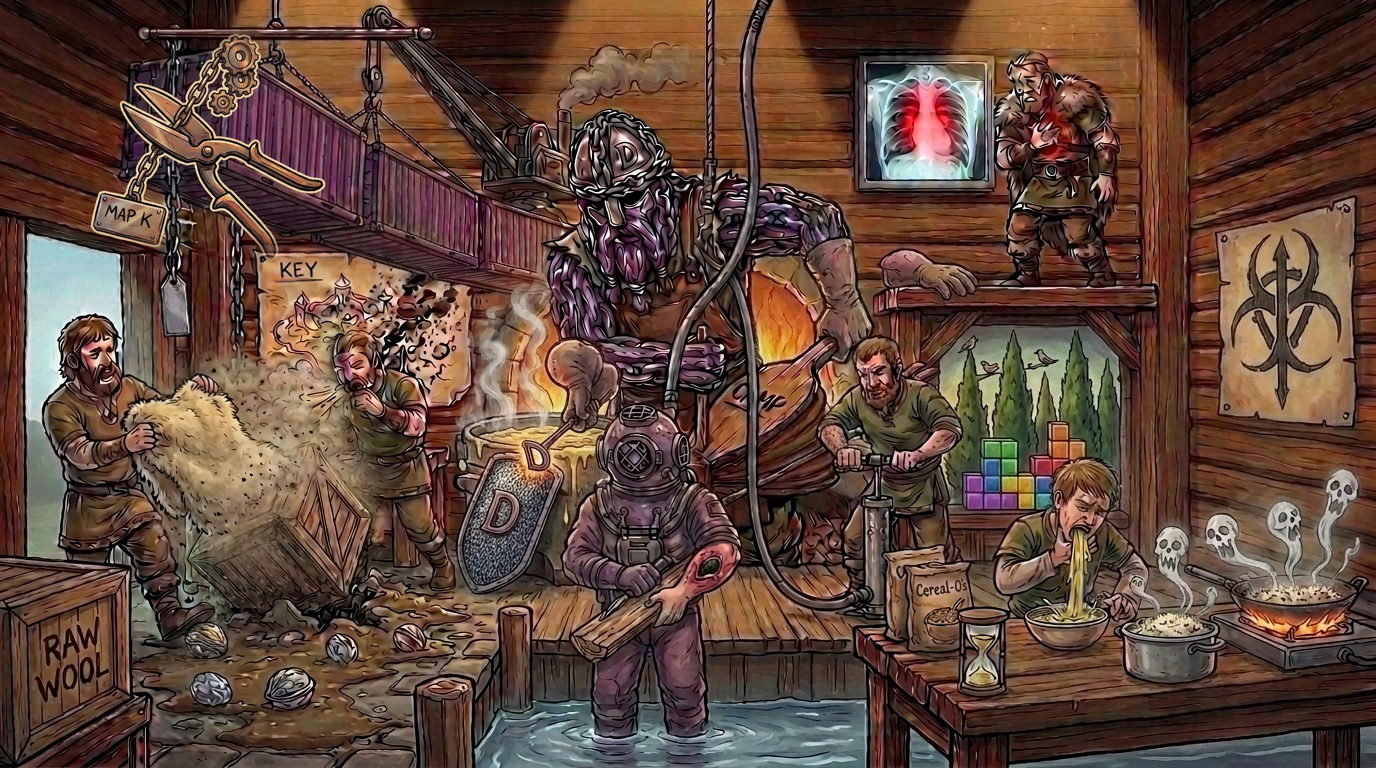
Bacillus anthracis causes anthrax (black eschar, widened mediastinum) via potent exotoxins, while Bacillus cereus causes rapid-onset food poisoning from reheated rice.
 1 / 11
Bacillus species are large, Gram-positive (purple) bacilli (rods) that characteristically arrange themselves in long chains.
🔗 The panel flagged the previous 'chain-linked logs' for appearing too oval, risking confusion with cocci, and for copying a competitor's theme. The revision uses distinctly rectangular shipping containers to clearly depict bacilli (rods). The new shipping dock theme is original and avoids the competitor's Viking motif, while still providing a strong visual for 'large, Gram-positive rods in chains'.
🔬 Identification
- •Large, Gram-positive (purple) bacilli (rods) in long chains, often described as 'boxcar-shaped'.
- •Spore-forming bacteria found in soil; spores are highly resistant to heat, chemicals, and desiccation.
- •Obligate aerobes, meaning they require oxygen for growth.
🛡️ Bacillus anthracis: Virulence Factors
- •Unique polypeptide capsule made of poly-D-glutamate, which protects the bacterium from phagocytosis.
- •Edema Factor (EF): An exotoxin that functions as an adenylate cyclase, increasing intracellular cAMP and causing massive edema.
- •Lethal Factor (LF): An exotoxin that acts as a protease, cleaving MAP kinase (MAPK) and leading to macrophage apoptosis and tissue necrosis.
🩺 Bacillus anthracis: Clinical Disease
- •Cutaneous Anthrax: Most common form. Presents as a painless papule that ulcerates, forming a characteristic black eschar (necrotic ulcer) surrounded by significant edema.
- •Pulmonary Anthrax (Woolsorter's Disease): Contracted by inhaling spores from contaminated animal products (wool, hides). Begins with non-specific flu-like symptoms but rapidly progresses to hemorrhagic mediastinitis, shock, and death.
- •Imaging: Chest X-ray in pulmonary anthrax characteristically shows a widened mediastinum.
🍚 Bacillus cereus: Clinical Disease
- •Food Poisoning (Emetic Type): Classically associated with reheated fried rice.
- •Caused by ingestion of a preformed, heat-stable enterotoxin (cereulide).
- •Presents with rapid-onset (1-5 hours) nausea and vomiting. Diarrheal form has a longer incubation and is caused by a heat-labile toxin.
💊 Treatment
- •Bacillus anthracis: Treat with fluoroquinolones (e.g., ciprofloxacin) or tetracyclines (e.g., doxycycline).
- •Bacillus cereus: Food poisoning is self-limiting; requires only supportive care.
🧠 Mnemonics
🩺 Classic boards tip-off
A 45-year-old rancher presents with a painless ulcer on his forearm that has developed a central black, necrotic eschar surrounded by significant non-pitting edema; the diagnosis is cutaneous anthrax caused by Bacillus anthracis.
Lesson Info
- Duration
- 10 minutes
- Status
- Completed
- Topic
- Microbiology
- Unit
- Bacteria

